A home is far more than a simple shelter; it is a complex, dynamic ecosystem where architectural design, structural engineering, utility networks, and aesthetic choices intersect. Managing a residential property effectively requires a holistic perspective that spans initial aesthetic planning, structural renovations, critical mechanics, and ongoing preventative care. When homeowners address these components as interconnected parts of a single unified system, they protect their substantial financial investments while simultaneously elevating their daily living standards.
Every decision made within a dwelling has a compounding ripple effect on its long-term health, valuation, and functional safety. An upgrade to an interior layout can influence property values, while neglect in underlying mechanical infrastructure—such as drainage, climate control, or basic plumbing—can rapidly erode structural soundness. Modern homeownership demands a deliberate strategy that harmonizes form and function. By establishing a proactive management approach, property owners can transform routine property upkeep from a series of stressful emergency interventions into an organized, rewarding roadmap of continuous improvement.
This comprehensive guide explores ten pivotal pillars of property optimization. From high-level architectural interior styling and customized structural woodworking to essential mechanical upkeep, outdoor living environments, and subsurface utility management, each section delivers detailed insights and actionable frameworks. By taking a strategic approach to design, renovation, and maintenance, you can ensure that every square foot of your residence serves your lifestyle goals and maintains its market value for decades to come.
1. Crafting Visionary Interiors: Strategic Space Planning & Aesthetics
Creating an exceptional living environment begins with a structured vision of how spaces function on both a practical and emotional level. Thoughtful spatial planning evaluates how family members navigate rooms, how natural light shifts throughout the day, and how furniture arrangements support both social interaction and quiet relaxation. Rather than selecting individual decor pieces haphazardly, homeowners who invest in a professional interior design service establish a cohesive narrative. Expert designers bring a deep understanding of color psychology, spatial proportions, acoustic balance, and material durability, ensuring that every stylistic choice reinforces the overall functionality of the room.
A successful interior design service aligns aesthetic desires with everyday reality. It balances architectural features with tailored lighting schemes, custom window treatments, and ergonomically arranged furnishings. By curating cohesive color palettes and textural contrasts, living spaces feel intentional, harmonious, and expansive regardless of square footage.
Key Elements of Comprehensive Interior Spatial Design:
-
Focal Point Alignment: Arranging architectural elements, artwork, or views toward key visual anchors within the space.
-
Layered Lighting Schemes: Combining ambient, task, and accent lighting to adapt rooms seamlessly for daytime productivity, evening relaxation, or specific hosting activities.
-
Ergonomic Spatial Flow: Maintaining wide pathways and intuitive traffic lanes between major living zones to prevent bottlenecks and clutter accumulation.
-
Material & Texture Cohesion: Harmonizing textiles, woods, stone, and metals across open-concept layouts to create visual continuity throughout the residence.
2. The Heart of the Home: Custom Architectural Cabinetry & Storage
Storage solutions define both the visual clean lines and the practical efficiency of major living zones, particularly in kitchens, pantries, and mudrooms. High-grade custom kitchen cabinetry acts as the backbone of residential organization, dictating how effectively culinary spaces operate under daily use. Modern millwork moves beyond simple stock shelving, incorporating fully integrated drawer organizers, pull-out spice racks, soft-close hardware, and concealed appliance garages that keep countertops clutter-free.
Investing in custom or semi-custom millwork allows homeowners to utilize vertical height efficiently and adapt storage around existing architectural quirks. Premium materials, such as solid hardwood frames, furniture-grade plywood box construction, and durable factory-applied finishes, ensure that high-use areas withstand heat, moisture, and frequent mechanical movement over decades.
Essential Considerations for Quality Cabinetry Investment:
-
Cabinet Box Material: High-density furniture-grade plywood offers far superior moisture resistance and screw-holding power compared to standard particle board or MDF options.
-
Hardware Mechanics: Full-extension, under-mount drawer slides with soft-close mechanisms prevent structural wear over time and optimize total volume usage.
-
Finish & Protection: Factory-baked conversion varnishes offer maximum resistance to kitchen oils, steam, and everyday impact, maintaining finish integrity.
-
Custom Ergonomics: Deep pot drawers, corner Lazy Susans, and vertical tray dividers optimize accessibility, reducing physical strain during routine tasks.

3. Structural Transformations: Navigating Whole-House Renovations
When living spaces no longer align with a household’s size or modern functional needs, comprehensive structural alterations become necessary. Working alongside established home remodeling companies enables property owners to safely execute structural line changes, expand footprints, or reconfigure outdated layouts. Experienced structural contractors manage complex engineering calculations, obtain necessary municipal permits, and coordinate trade specialists to ensure that wall removals and load transfers are completed without compromising structural integrity.
Large-scale renovations require rigorous planning, realistic budgeting, and clear project management timelines. By establishing a clear scope of work before demolition, homeowners avoid costly mid-project modifications and ensure that mechanical systems are updated concurrently with cosmetic upgrades.
Critical Stages of a Structural Renovation:
-
Feasibility & Architectural Blueprinting: Assessing load-bearing walls, structural foundation capacities, setback regulations, and electrical feed limits before breaking ground.
-
Demolition & Structural Framing: Removing outdated elements, inserting steel or laminated veneer lumber (LVL) beams, and establishing new structural walls.
-
Rough-in Inspections: Concealing updated electrical wiring, plumbing runs, and HVAC routing behind framing prior to drywall installation and inspection sign-offs.
-
Finish Carpentry & Surface Application: Precise installation of trim work, custom casing, hardwood flooring, wall finishes, and integrated fixtures.
4. Outdoor Living Architecture: Enhancing Curb Appeal & Decking
Extending functional living areas into the surrounding landscape dramatically increases a home’s usable footprint and connection with nature. Collaborating with specialized porch builders allows homeowners to design custom outdoor spaces—ranging from classic wrap-around porches to screened three-season rooms—that seamlessly match the architectural style of the main residence. Properly engineered outdoor structures offer sheltered zones for dining, entertainment, and quiet outdoor relaxation while shielding entry doors from harsh weather exposure.
Selecting appropriate materials is paramount for outdoor architectural features that endure changing seasons. Modern options range from traditional pressure-treated pine and exotic hardwoods like Ipe to low-maintenance composite and PVC decking materials that resist rot, insect damage, and UV degradation.
Key Pillars of Outdoor Structural Design:
-
Foundation Footings: Pouring deep concrete piers below local frost lines to prevent heave, settling, and structural shifting over years of weather cycles.
-
Roofline Integration: Matching roof pitches, shingles, soffits, and architectural trim so additions appear original to the main dwelling structure.
-
Ventilation & Screen Mechanics: Installing high-durability mesh and ceiling circulation fans to maintain airflow and comfort during warmer months.
-
Integrated Illumination: Concealing low-voltage LED stair lighting, post caps, and ambient fixtures for evening safety and atmosphere.

5. Aquatic Extensions: Custom Pool Engineering & Landscape Integration
A custom swimming pool transforms a residential yard into a private resort, providing opportunities for low-impact exercise, relaxation, and outdoor gatherings. Engaging professional pool builders ensures that the pool’s placement, excavation, structural shell, and filtration infrastructure are optimized for the specific soil conditions and topography of the property. Modern pool construction utilizes high-strength shotcrete or gunite, permitting completely custom freeform or geometric designs complete with built-in spas, sun shelves, and waterfall features.
Beyond initial excavation and concrete placement, integrated pool engineering requires careful consideration of energy-efficient pump systems, water sanitization technologies, and automation controls. High-efficiency variable-speed pumps, salt-chlorination systems, and automated chemical monitors significantly reduce ongoing chemical handling and operational costs.
Primary Phases of Custom Pool Construction:
-
Site Engineering & Excavation: Mapping property lines, surveying soil composition, and excavating precise pool contours with heavy machinery.
-
Steel Rebar Cage & Hydraulic Rough-In: Constructing a dense reinforcement grid and installing primary main drains, return lines, skimmers, and spa jets.
-
Concrete Application & Interior Finishing: Pneumatically applying gunite followed by waterproof plaster, aggregate, or tile finishes.
-
Surround Decking & Safety Barrier Installation: Laying non-slip coping, surrounding patio hardscapes, and installing mandated security fencing with auto-locking gates.
6. Solid Foundations: Advanced Concrete Restoration & Surface Finishes
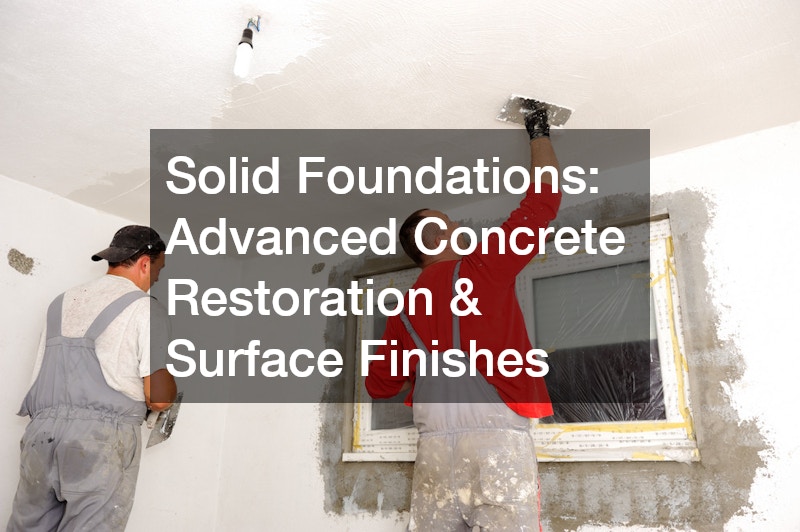
Hardscape elements like driveways, walkways, patio slabs, and pool decks undergo constant stress from vehicular weight, foot traffic, freeze-thaw cycles, and chemical exposure. When concrete surfaces develop spalling, surface cracking, or discoloration, complete teardown and replacement is rarely the most cost-effective path. Professional concrete resurfacing provides an advanced engineered alternative, bonding polymer-modified cementitious overlays directly over existing concrete to restore strength, texture, and visual appeal.
Resurfacing systems can be customized with stamped patterns, integral color stains, and slip-resistant broom or aggregate textures that mimic natural stone, brick, or pavers. The success of any surface restoration relies entirely on thorough substrate preparation, ensuring long-term adhesion without flaking or delamination.
The Surface Restoration Process:
-
Substrate Cleaning & Repair: Pressure-washing, grinding away contaminants, and filling structural cracks with high-tensile epoxy or polyurethane compounds.
-
Mechanical Profiling: Acid etching or shot-blasting the surface to create an optimal anchor profile for new coatings to bond permanently.
-
Overlay Application: Applying polymer-fortified cementitious overlays via trowel, spray, or squeegee at precise thicknesses across the substrate.
-
Protective Sealing: Applying penetrating clear acrylic or polyurethane sealers to guard against oil stains, moisture penetration, and UV fade.
7. Essential Utilities: Comprehensive Plumbing Infrastructure
A home’s plumbing network is a silent utility system that delivers clean potable water and safely removes wastewater continuously. Maintaining this vital infrastructure requires routine inspections and prompt attention to minor pressure drops, slow drains, or subtle fixture leaks. Hiring a licensed plumbing contractor ensures that pipe installations, water heater replacements, and drainage upgrades comply with municipal health and safety codes while preventing costly moisture damage behind walls and under subfloors.
Modern plumbing systems incorporate advanced materials such as cross-linked polyethylene (PEX) for supply lines, offering flexibility, corrosion resistance, and reduced risk of burst pipes in freezing temperatures. Additionally, transitioning to tankless water heaters provides continuous hot water while significantly reducing standby energy consumption.
Core Elements of a Resilient Home Plumbing System:
-
Pressure-Regulating Valves (PRV): Maintaining main water pressure between 45–65 PSI to protect delicate appliances, valve seals, and pipe joints from stress.
-
Backflow Prevention Systems: Ensuring cross-connections do not allow contaminated water to siphon back into the municipal or clean domestic supply line.
-
Drain-Waste-Vent (DWV) Integrity: Preserving proper drain slopes and air venting to allow smooth waste movement and prevent toxic sewer gas venting into living areas.
-
Smart Leak Detection Shut-Offs: Inline emergency valves that automatically shut off main water supplies when abnormal flow patterns or continuous leaks are detected.
8. Sub-Surface Sanitation: Private Septic System Maintenance
For properties located outside municipal sewer networks, managing on-site wastewater treatment requires diligent maintenance and informed usage habits. Operating a private treatment network demands continuous oversight, as system failures can cause soil contamination, backup into living spaces, and expensive field replacements. Partnering with specialized septic services provides property owners with essential maintenance routines, including regular tank inspections, sludge depth measurements, and scheduled pumping intervals every three to five years.
Maintaining a healthy biological environment inside the septic tank relies on keeping damaging household chemicals, non-biodegradable products, and excessive grease out of drains. Proper management of the surrounding drainfield is equally critical, requiring clear surface drainage and keeping heavy vehicles or structures off the treatment soil area.
Best Practices for Private System Longevity:
-
Routine Pumping Schedule: Pumping accumulated solids every 3 to 5 years prevents sludge from washing into and permanently clogging the drainfield soil absorption trenches.
-
Water Conservation Habits: Staggering laundry loads and installing low-flow fixtures prevents hydraulic overloading of the settling tank.
-
Drainfield Protection: Diverting roof downspouts away from the absorption area and avoiding deep-rooted tree plantings nearby.
-
Effluent Filter Maintenance: Cleaning the outlet baffle filter annually to catch suspended solids before they leave the main tank.
9. Climate Control & Thermal Comfort: Heating System Care
Maintaining a comfortable interior climate during freezing winter months requires a dependable, highly efficient heating system. Gas furnaces, heat pumps, and boiler systems rely on continuous electrical, mechanical, and combustion processes that wear down over time. Scheduling regular professional heating repairs and annual tune-ups prevents unexpected system failures during winter storms while preserving operational fuel efficiency and keeping heating bills low.
Regular maintenance includes checking heat exchangers for dangerous carbon monoxide cracks, recalibrating digital thermostats, replacing dirty air filters, and lubricating mechanical motor bearings. Updating older heating equipment with modern multi-stage furnaces or cold-climate heat pumps significantly improves thermal distribution while lowering carbon footprints.
Essential Annual Heating Care Items:
-
Filter Replacement: Exchanging air filters every 30 to 90 days to maintain airflow, preserve indoor air quality, and prevent heat exchanger overheating.
-
Burner & Ignition Cleaning: Removing soot and oxidation from igniters, pilot assemblies, and gas burners to ensure clean, efficient combustion.
-
Ductwork Inspection: Sealing air leaks with mastic sealant and insulating unconditioned duct runs to prevent warm air loss in attics and crawlspaces.
-
Safety Control Testing: Verifying limit switches, flame sensors, and pressure safety controls work reliably under full thermal loads.
10. Physical Security & Access Control: Advanced Locksmithing
A fully renovated and well-maintained property must be protected by robust physical entry barriers and modern access controls. Mechanical door hardware, high-security deadbolts, and smart electronic locks represent the primary line of defense against unauthorized entry. Professional locksmiths evaluate physical entry points, correct misaligned strike plates, rekey old cylinders after property purchases, and install high-security deadbolts that resist picking, drilling, and bumping attacks.
Integrating modern electronic keypads or smart deadbolts into traditional security hardware provides convenient keyless access, temporary visitor codes, and remote activity logging via smartphone apps. Proper hardware installation ensures that physical security integrated with modern digital access operates reliably without jamming or binding.
Property Access & Security Checklist:
-
Grade 1 or Grade 2 Deadbolts: Installing ANSI-certified heavy-gauge metal deadbolts with 1-inch throw bolts on all exterior doors.
-
Reinforced Strike Plates: Securing jamb strike plates with 3-inch hardened steel screws that anchor directly into wall framing studs rather than thin jamb trim.
-
Restricted Keyways: Utilizing key systems with patented keyways that prevent unauthorized duplicate key cutting at hardware stores.
-
Smart Lock Calibration: Ensuring electronic smart deadbolts align perfectly with frame latch holes to preserve battery longevity and mechanical motor life.
Managing a home successfully requires balancing aesthetic upgrades with essential maintenance. When every component—from interior styling and custom millwork to outdoor structures, heating, plumbing, and physical security—is planned and maintained thoughtfully, property owners create living spaces that are functional, safe, and built to last. Proactive upgrades and continuous preventative maintenance prevent costly emergency repairs, preserve property values, and improve overall quality of life.
Investing in your residence is an ongoing process of thoughtful enhancement. By working with skilled professionals, selecting durable materials, and adhering to scheduled maintenance, you protect your real estate assets and build a home that delivers comfort, efficiency, and peace of mind for years to come.